
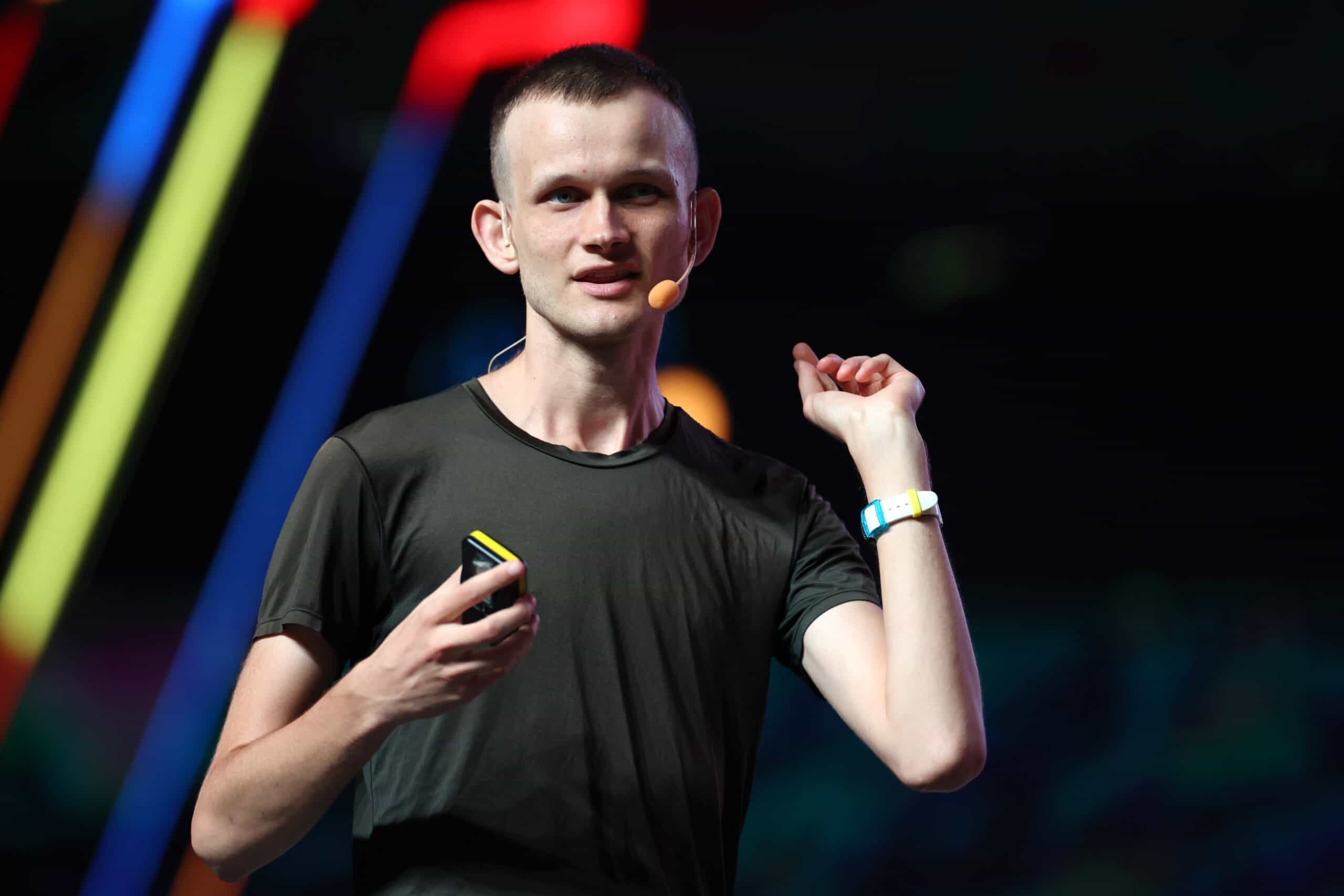
In recent commentary on the future of Ethereum, Vitalik Buterin discussed a considerable pivot – the network should prioritize increasing its bandwidth (capacity to handle data) over reducing latency (speed of transaction processing).
His core argument rests on the difference between what is difficult and what is physically impossible. Reducing latency, which essentially means the time it takes for a transaction to be confirmed, is fundamentally constrained by the speed of light, among other things:
“We are fundamentally constrained by the speed of light, and on top of that we are also constrained by […] need to support nodes in rural environments, worldwide, and in home or commercial environments outside of data centers, need to support censorship-resistance and anonymity for nodes, etc… [Quote shortened for editorial purposes].”
Although it sounds complicated, there is a relatively simple way to visualize this concept.
The Highway Analogy: Bandwidth vs. Latency
To best understand what Buterin speaks about, picture Ethereum as a highway. The problem is traffic-related – you want to transport more people.
You only really have two options:
Reduce the latency (speed) of transportation by making every car drive a lot quicker.
Increase the bandwidth (capacity) of the highway by building more lanes.
Buterin argues that Ethereum should go with the second option because trying to make the cars travel quicker is dangerous and fundamentally constrained.
This also ties to another post he wrote five years ago titled The Limits to Blockchain Scalability. In it, Ethereum’s co-founder discussed a tweet by Elon Musk:
Ideally, Doge speeds up block time 10X, increases block size 10X & drops fee 100X. Then it wins hands down.
— Elon Musk (@elonmusk) May 16, 2021
Vitalik outlined how challenging this is without sacrificing security and decentralization. In essence, he argued that regular people should be able to run nodes on their standard equipment (such as laptops), meaning that the blockchain is naturally constrained by the capabilities of this equipment. The alternative is for nodes to be run through data centers, which risks centralization:
The elites of your blockchain community, including pools, block explorers and hosted nodes, are probably quite well-coordinated; quite likely they’re all in the same Telegram channels and WeChat groups. If they really want to organize a sudden change to the protocol rules to further their own interests, then they probably can.
That said, he also said that latency can, indeed, be reduced with existing technologies, without making tradeoffs. These include:
P2P improvements (esp erasure coding), (which) can decrease message propagation times without requiring individual nodes to have lower bandwidth.
An available chain with a smaller node count per slot (eg. 512 instead of 30,000), which can remove the need for an aggregation step, allowing the entire hot path to happen in one subnet.
According to Buterin, this alone can scale Ethereum by three to six times and is “very much in the realm of possibility.”
The World Heartbeat
And yet, this particular technical divergence defines Ethereum’s ultimate purpose – to be the World’s Heartbeat instead of the World’s Video Game Server.
He argues that with existing technologies such as PeerDAS and ZKPs, the means to scale exist and Ethereum can be scaled thousands of times, at least compared to the current status quo. He also outlined that the numbers become a lot more favorable than before, and that there is no constraint that prevents “combining extreme scale with decentralization.”
Following my previous analogy, this simply means that there’s nothing stopping the team from building a highway with as many lanes (possibly thousands) as needed.
However, this also means that there will come a time when applications might require speeds greater than the heartbeat (e.g. Ethereum). In that case, Vitalik says that these applications should have off-chain components. This also means that layer two scaling solutions will continue to have a role in the future, even if Ethereum is scaled greatly.
The post The Highway Analogy: Vitalik Buterin’s Plan to Scale Ethereum 1000x appeared first on CryptoPotato.