
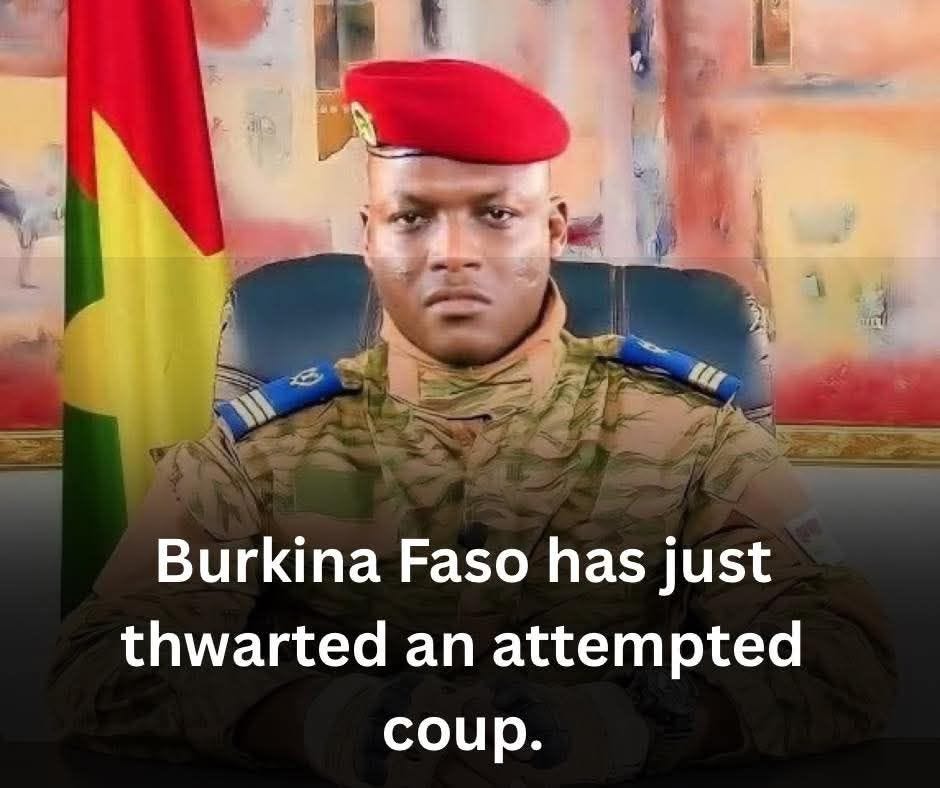
Ibrahim Traoré Survives Another Coup d’Etat.
Image, courtesy of PowerfulAfrica (Facebook)
In the early hours of January 3, 2026, Burkina Faso’s capital, Ouagadougou, became the stage for yet another chapter in the nation’s turbulent political history. Security forces successfully thwarted an attempted coup against transitional President Captain Ibrahim Traoré, marking what sources describe as the 23rd such plot against his regime since he seized power in 2022.
This latest incident underscores the ongoing instability in the West African nation, plagued by jihadist insurgencies, internal military rivalries, and allegations of foreign interference.
Background: A Legacy of Coups and Conflict
Burkina Faso, a landlocked country in the Sahel region, has endured a series of military takeovers in recent years. In January 2022, Lieutenant Colonel Paul-Henri Sandaogo Damiba ousted elected President Roch Marc Christian Kaboré, citing failures in addressing the escalating security crisis from Islamist militants affiliated with al-Qaeda and the Islamic State.
However, Damiba’s rule was short-lived; in September 2022, Captain Ibrahim Traoré, then 34 years old and the youngest leader in Africa, led a coup against him, promising to restore security and sovereignty.
Traoré’s administration has focused on combating terrorism through enhanced military operations, including the use of drones, and has distanced itself from former colonial power, France. Burkina Faso, alongside Mali and Niger, formed the Alliance of Sahel States (AES) in 2023, withdrawing from the Economic Community of West African States (ECOWAS) and expelling French troops. This shift has been popular among many Burkinabè, who view Traoré as a defender against neocolonial influences, but it has also bred enemies within and beyond the borders.
Previous coup attempts, including one in September 2023 and another in April 2025, have been linked to Damiba’s loyalists and external actors. The country continues to grapple with violence, with over 2 million people displaced by insurgent attacks.
Captain Ibrahim Traoré, the transitional president of Burkina Faso, has become a symbol of resistance against foreign influence amid ongoing security challenges.
The Plot: Orchestrated from Exile
According to intelligence reports, the January 3, 2026 plot was orchestrated from Lomé, Togo, where Damiba has been in exile since his ousting. The alleged mastermind, a close associate of Damiba, was arrested around 11 p.m. GMT as the group prepared to launch their operation. The plan reportedly involved assassinating key military and civilian figures, destroying drones critical to anti-terrorism efforts, and seizing control of vital institutions in Ouagadougou.
Evidence from the mastermind’s phone revealed “highly compromising” communications linking the conspirators to Damiba. Audio recordings have surfaced, in which Damiba allegedly discussed sabotaging the drones to weaken the armed forces and expressed confidence that the population would not resist due to the ensuing shock. The plotters included military personnel, civilians, and foreigners, with reports of European mercenaries — possibly French — being captured.
Allegations of French involvement have been rampant, with some sources claiming the attempt was inspired by the U.S.-backed events in Venezuela the same night and aimed at restoring French influence over Burkina Faso’s resources.
France, which lost its military presence in the country in 2023, has been accused of supporting Damiba’s network as part of broader “Francafrique” dynamics. Neighboring countries like Côte d’Ivoire and Togo have also been implicated in harboring plotters.
The Foiling: Swift Action by Security Forces
Burkina Faso’s defense and security forces (FDS), bolstered by vigilant intelligence, intervened decisively to prevent the coup. No casualties were reported, and at least nine suspects — described as “spies, traitors, and enemies of Burkina Faso” — were detained. The operation’s success highlights the regime’s improved counterintelligence capabilities, honed through repeated threats.
Commander Oumar Yabré and other loyal officers played key roles in the response, demonstrating the cohesion within Traoré’s inner circle. The government’s swift action not only neutralized the immediate danger but also sent a strong message to potential dissenters.
Public Response: A Wave of Solidarity
News of the attempt spread rapidly around 1 a.m., prompting thousands of citizens, particularly youth, to mobilize in support of Traoré. Crowds gathered outside the presidential palace, chanting slogans and keeping vigil through the night. Videos from the scene show chaotic yet determined rallies under streetlights, with people waving flags and signs in a display of loyalty.
This outpouring echoes the spirit of Thomas Sankara, Burkina Faso’s revolutionary leader assassinated in 1987, whom many see echoed in Traoré’s anti-imperialist stance. The public’s response underscores Traoré’s popularity, rooted in his promises of sovereignty and security, despite criticisms of authoritarian tendencies.”
Supporters rally in Ouagadougou, demonstrating widespread public backing for Traoré following the foiled plot.
Aftermath and Implications
In the wake of the attempt, Traoré’s government has vowed to pursue all involved, including calls for Togo to extradite Damiba. The incident may lead to further purges within the military, potentially increasing paranoia but also consolidating power.
Regionally, it highlights the fragility of Sahel states amid jihadist threats and geopolitical shifts. The AES bloc could strengthen, viewing the plot as external aggression. Internationally, accusations against France may strain relations further, while the U.N. and ECOWAS have been criticized for inaction.
For Burkina Faso, this failed coup is a testament to resilience. As one observer noted, “Stability and sovereignty remain intact.” Yet, with insurgents still active and political divisions deep, the path to lasting peace remains uncertain. Traoré’s leadership, forged in crisis, continues to inspire hope — and provoke opposition — in equal measure.
Traoré is the actual leader of the entire continent of Africa. He has singlehandedly transformed African governance from a mere collection of puppet regimes of the West to nation states on the way to solving the problems of their respective countries and working for the benefit of their citizens.
His future, no matter what happens to him physically, is bright and filled with hope! They may succeed in ousting him, but he has already altered the consciousness of the new generation of African youth!
Like Thomas Sankara, Traoré has become an Idea that cannot be destroyed; a Light that cannot be extinguished!
Disclaimer:
1. This article was written, in part, with the assistance of artificial intelligence, Grok in gathering available information on the latest developments in Burkina Faso.
The Failed Coup d’État in Burkina Faso: A Night of Defiance and Stability was originally published in Coinmonks on Medium, where people are continuing the conversation by highlighting and responding to this story.